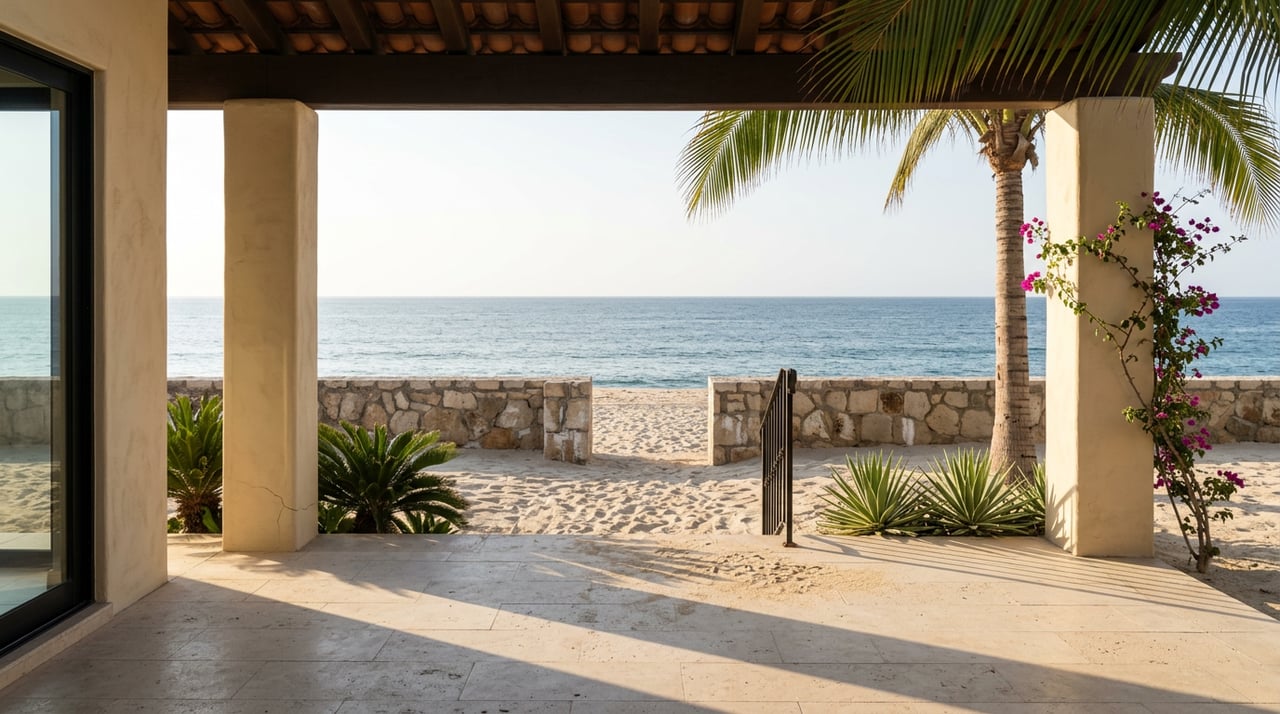
Walk out from El Zalate at seven in the morning and turn north, and you will find a line of surfers shoulder to shoulder in the water, waiting on a reef break with enough reputation that riders travel across continents to sit in that same lineup. Turn south instead, and the water might be nearly empty except for a longboarder or two, catching an easy roller with room to spare. Same beach. Same morning. Two different moods, ninety seconds apart on foot.
Costa Azul, the mile of sand that runs past El Zalate's front gate between Km 28 and 29 of the Transpeninsular Highway, is not one beach with one personality. It is four separate breaks stacked along a single stretch of coastline, each with its own crowd, its own skill level, and its own tide window. People who have lived here a season or two stop asking how the surf looks and start asking what the tide is doing, because on this beach the tide chart tells you more than any swell forecast will.
Four Breaks, One Mile of Sand
Start at the north end, near the lookout by Cabo Surf Hotel, and work south:
- Zippers — a fast, powerful right-hand reef break, and the wave that earned this stretch its reputation as the summer surf capital of the Corridor. Steep takeoff, close reef, not a beginner's wave.
- La Roca, known locally as The Rock — a step down in intensity from Zippers, the workable middle ground for someone who has outgrown whitewater.
- Middle — a gentler, beginner-friendly peak between La Roca and the south end.
- Acapulquito, better known by its English nickname Old Man's — slow, forgiving, and where longboarders and first-timers spend their mornings.
Four names, one mile, four completely different sessions depending on where you plant your towel.
The businesses along this stretch match the rhythm. Board rentals and lessons for any of these four breaks are available directly across the highway at Costa Azul Surf Shop, and Zipper's Bar & Grill, perched near the reef at the north end, is where non-surfing residents watch the lineup over tacos and ribs rather than paddle into it. Closer to the south end, a beachfront spot called Pescadito Break serves Baja cuisine a few steps from the sand, named for the gentle wave that breaks nearby.
The Tide Chart Beats the Forecast
Ask around and the thing that actually decides which of these four breaks is working today has less to do with wave height than water depth. Zippers wants a mid-tide rise, enough water to cover the reef without smothering the wave's energy, a window that typically runs a few hours as the tide climbs. Let the tide drop too far and the same reef that makes Zippers famous turns hazardous, exposing rock close enough to the surface to end a session early. Push the tide too high and the wave can flatten, losing the wall that makes it worth riding at all.
Old Man's works in the opposite direction. Acapulquito tends to hold its shape better on higher water, which is part of why it picks up the crowd that Zippers loses when the tide floods in, according to local surf shop guidance on reading these breaks. The practical result for anyone treating this beach as a backyard rather than a bucket-list stop is that the useful morning habit isn't opening a swell forecast app. It's glancing at a tide table and knowing which of the four breaks that hour belongs to.
Time of day matters too. The cleanest conditions generally arrive at first light, before the onshore wind that typically builds by midday turns a glassy wall into chop. Households along this stretch tend to move their morning walk or their coffee to match that window rather than the other way around.
The Beach Trades Places With Itself Twice a Year
The mile of sand outside El Zalate does not just change hour to hour. It changes seasons, and the shift is dramatic enough that the same stretch of beach behaves almost like two different neighborhoods depending on the month.
| Season | What the Water Is Doing | What Else Is Happening |
|---|---|---|
| Roughly May through October | Consistent south swells keep Zippers and La Roca working most mornings, and this stretch earns its reputation as the summer surf capital of the Corridor | Warmer water, bigger lineups, surf shops along the highway at their busiest |
| Roughly November through March | The swell calms, and water that challenges reef surfers in summer turns calm enough for swimming and snorkeling | Whale season generally overlaps this stretch of the calendar, and some residents time an evening walk in November hoping to spot hatchling sea turtles making their way to the water |
The practical upshot: a household that expects a year-round surf backdrop will find that backdrop softens for roughly a third of the year into something closer to a calm swimming cove. A household that pictured a quiet swimming beach should know that same water turns into a working reef break for the other two-thirds.
One Week in June, the Sand Becomes a Festival
Once a year, usually for the better part of a week in June, the character of this beach changes on purpose. The Los Cabos Open of Surf has run at Zippers since 2013, when it launched as a qualifying event under the sport's international governing body, and it has grown well past a surf contest. Recent editions have drawn crowds estimated above 50,000 people over the run of the event, with a beachfront food fair, live music, and side programming that spills into fashion shows and skateboarding exhibitions.
For a household living a few hundred yards away, that week means tight parking along the highway, a stage going up where the early surf check usually happens, and a crowd at the water's edge that triples overnight. It also means a front-row seat to one of the region's larger annual events without leaving the neighborhood. The event has generally landed in mid-June in recent years, which is why residents who have spent a summer or two here build their June calendar around it rather than being caught off guard by it.
The Rest of the Week Happens a Short Drive Away
Not every rhythm on this coast is dictated by tide or swell. San José del Cabo runs its Art Walk on Thursday evenings from November through June, when the galleries in the Art District stay open late and the historic core fills with a slower, browsing crowd. For a household at El Zalate, positioned within an easy walk or short drive of town, that Thursday evening is close enough to fold into a weeknight without much planning, a counterpoint to a morning spent watching whichever of the four breaks happened to be working.
That is the actual texture of living on this mile of sand: mornings organized around a tide chart rather than a weather app, a summer identity that trades places with a winter one, one loud week in June the rest of the calendar quietly builds toward, and a weekly excuse to walk into town on a Thursday. None of it shows up on a listing sheet, and all of it is what separates owning a beachfront address from actually living on this particular beach.
If you are curious what else is worth knowing about life along Costa Azul, or anywhere else on the Corridor, Christie's Real Estate Cabo has spent years learning these details the way residents do, one tide chart, one season, one June festival at a time. Start Your Cabo Search whenever you are ready to see what the rest of this coastline has to offer.